Why Athletes Keep Getting Re-Injured
The pattern is predictable: athlete gets hurt, does some treatment, pain improves, returns to sport, re-injures within a month.
Two things traditional care often misses:
- Pain resolves before dysfunction does. Your brain created compensation patterns that feel normal but load tissues incorrectly. Return to sport "pain-free" with faulty mechanics, and you're set up for the next injury.
- Pre-injury capacity wasn't enough. The tissue that failed was already operating near its limit. Getting "back to baseline" just resets the clock on the same failure.
At 417 Performance Sports Rehab we build what you need, not just what you had. You can come back stronger than before your injury.
What Is Non-Surgical Sports Rehab?
Non-surgical sports rehabilitation is built on one principle: your body adapts to load.
The tissues that failed you (tendons, muscles, ligaments, joints) need progressive stress to heal stronger. Rest alone leads to weaker, stiffer tissue that breaks down again once you return to activity.
This concept is called mechanobiology. When you load tissue correctly:
- Tendons stiffen and become more resilient
- Muscles generate more force
- Collagen remodels along lines of stress
- Tissue becomes tougher and better organized
This is why athletes who train through their rehab recover differently than people who just rest and wait.
How It Works in Practice
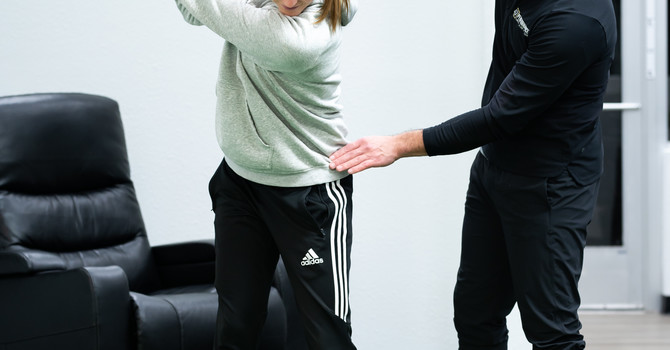
At 417 Performance our sports chiropractors combine hands-on treatment with progressive exercise, all aimed at one outcome: getting you back to full performance.
Manual therapy
(adjustments, soft tissue work, dry needling) reduces pain and restores mobility. But that's the setup, not the treatment itself. It creates a window of opportunity where your pain drops and your movement improves.
Loading is the actual treatment.
Targeted exercises stress tissue in ways that trigger biological repair and strengthening. Loads start light and controlled, then increase as your tissue adapts. Eventually, exercises mirror your sport because they need to prepare you for your sport.
Progression follows your tissue's readiness, not a calendar.
You advance when you hit benchmarks, not because four weeks passed. This prevents the setbacks that come from rushing.
Common Conditions Treated at Sports Chiropractic Clinics
BACK PAIN
Back pain can have many causes and lead to issues like piriformis syndrome, sciatica. Chronic back pain can lead to pain with sitting, standing, bending, and stop you from doing the things you love.
HEAD AND NECK PAINS
Modern life means sitting at desks, using phones and staring at computers. These modern amenities can often lead to painful consequences. We offer a plethora of services that fix stiff joints, difficulty turning your head while driving, Migraine Headaches, and TMJ pain.
HIP AND SHOULDER PAIN
Your body’s ball and socket joints; these joints give us a tremendous range of motion but also need a lot of stability. We have the right chiropractic techniques to help repair everything from labrum issues, to impingements, to a muscular tear. We will help you get out of pain fast!
KNEE AND ELBOW PAIN
Two of your body’s hinge joints, knees and elbows are often the victim of stresses coming from above or below the joint. We focus on relieving the painful tissue while also stabilizing the whole chain to fix the root cause of your pain now and also prevent other injuries in the future.
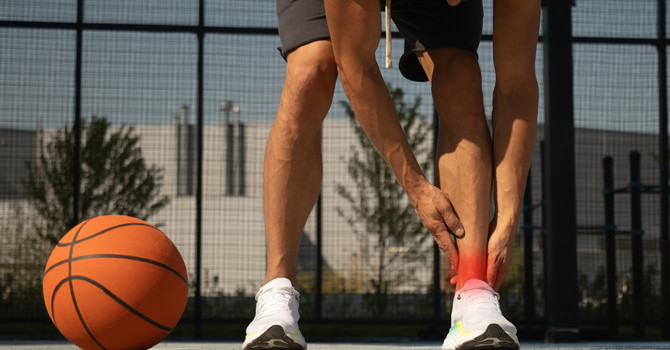
FOOT AND ANKLE PAINS
It’s often about more than just your insoles… Plantar Fasciitis, ankle sprains, and tendonitis are just a few of the many common causes of pain in the foot and ankle. Through proper evaluation we can find the root cause of the pain and give exercises to strengthen your foot and ankle to prevent future pain.
SPRAINS AND STRAINS
Whether is an ankle sprain or a muscle strain, not every pain is catastrophic. Most pains boil down to irritated tissues from overuse or improper use. We help those strains/sprains recover faster and prevent future re-injury.
What to Expect in a Session
First visit (45 to 60 minutes): We assess how you move, identify strengths and weaknesses, review your injury history, and understand your sport's demands. You leave with a clear diagnosis and a plan with real milestones.
Treatment sessions (30 to 60 minutes): One-on-one, every time. Early sessions focus more on hands-on work. As you progress, the balance shifts toward loading and sport-specific movement.
Homework matters. What happens between visits is as important as what happens in the clinic.
Sports Chiropractic vs. Traditional Chiropractic
Traditional chiropractic focuses on spinal adjustments. Visits are typically 15 minutes or less. You get adjusted, feel better, and leave. When relief fades, you come back. For chronic stiffness or tension headaches, this maintenance model works.
The limitation for athletes: Adjustments restore joint mobility but don't rebuild strength, restore movement patterns, or prepare tissues for athletic demands.
An adjustment opens a window where you feel better and move more freely. But if you don't use that window to load and strengthen tissue, nothing changes long-term. The underlying weakness, instability, or motor control problems stay unaddressed.
Sports chiropractic uses the same manual therapy skills, then fills that window with progressive loading that creates lasting change.
Sports Chiropractic vs. Traditional Physical Therapy
Traditional outpatient PT clinics treat a broad range of patients: post-surgical knees, car accident injuries, elderly balance issues, and some sports injuries. Therapists often manage three or four patients simultaneously. You get some one-on-one time, but you'll spend significant portions with an aide or exercising independently.
The treatment model relies heavily on passive modalities (hot packs, ultrasound, electrical stimulation). These feel like something is happening, but research shows limited long-term benefit when used as primary treatments.
The endpoint is typically "functional": walking without a limp, climbing stairs, daily activities without pain. For many patients, that's exactly right.
For athletes, "functional" is about 60% of the way there. And insurance often runs out right when sport-specific training should begin. You get discharged as "successful" while nowhere near ready for your sport.
Sports chiropractic treats return to sport as the actual endpoint.
Treatment continues through sport-specific loading, agility work, and performance testing. Sessions are one-on-one throughout. The same provider who evaluates you on day one works with you at every visit.
Who Should See a Sports Chiropractor
Sports chiropractic is built for athletes and active adults who need to return to something specific. If "just take it easy" isn't an acceptable answer, you're likely the right fit.
If this sounds like you...
- A high school or college athlete rehabbing an injury mid-season
- A recreational runner chasing a PR or trying to run pain-free again
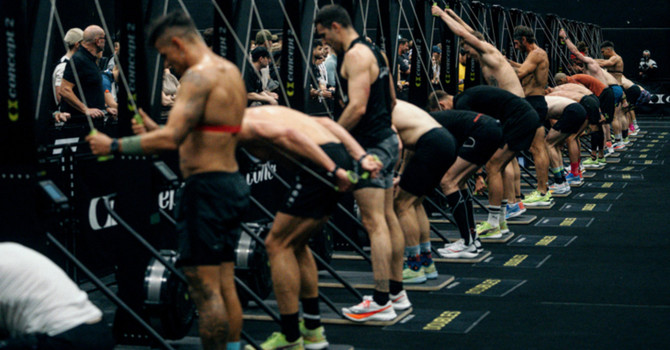
- A CrossFitter, powerlifter, or gym regular who won't accept chronic pain as the cost of training
- A weekend warrior who plays hard and needs their body to keep up
- A parent seeking sport-specific care for a young athlete's growing body
You are a great fit for Sports Chiropractic.
You're probably not the right fit if:
- You want quick adjustments with no exercise work between visits (traditional chiropractic is better)
- Your goal is general wellness or stress relief (not our specialty)
- You're dealing with non-musculoskeletal issues (digestive problems, systemic conditions)
- You need insurance to cover everything (traditional in-network PT may be more practical)
- You're in early post-surgical recovery (you'll likely start with traditional PT per surgeon protocol)
We'd rather point you to the right care than pretend we're right for everyone.
The Bottom Line
Sports chiropractic combines hands-on treatment with progressive rehabilitation, all aimed at returning you to full athletic performance and out of our office.
If that matches what you're looking for, we're ready to help you get started.